Driver Refresher Training Course
Returning to Driving After a Long Break: Start with an Assessment
Identify the situations that need practice and agree achievable goals before deciding how much refresher training to arrange.
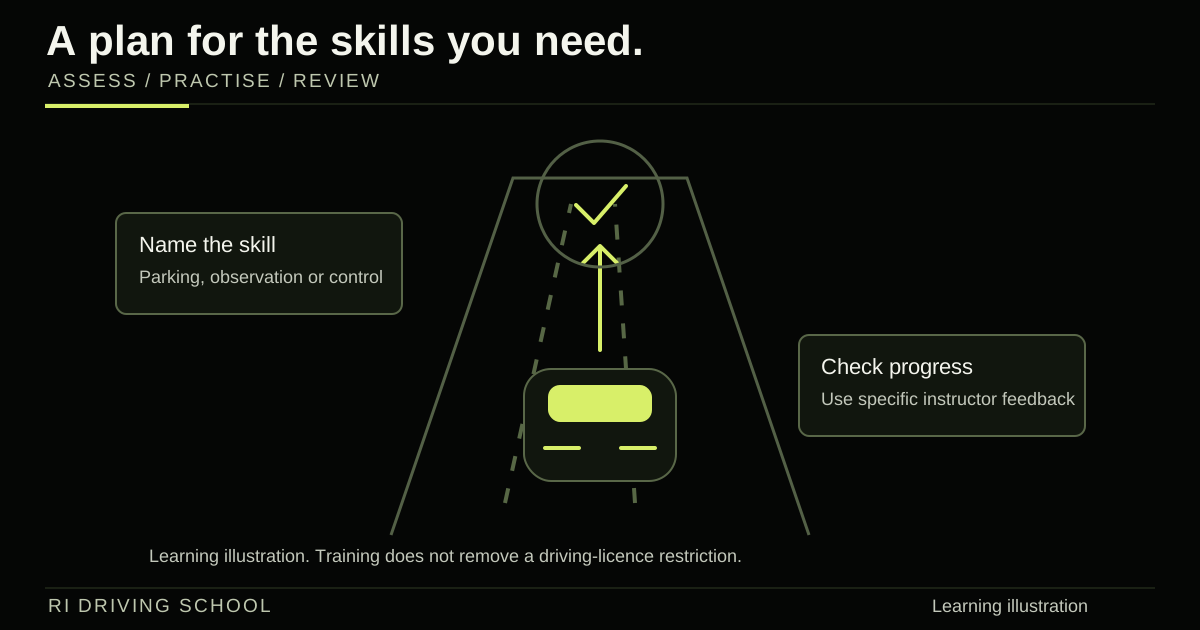
Returning to driving after a break can reveal uneven skills. You may remember the controls but feel uncertain about parking, or manage familiar roads while struggling with a different vehicle. A useful refresher plan begins by identifying those specific gaps. It should not assume that every returning driver needs the same route, number of sessions or level of support.
Confirm what kind of refresher you need
General refresher lessons help a person rebuild practical skills and confidence. Training required after a licence suspension or disqualification has a different legal purpose. If your licence has been seized, suspended, cancelled or otherwise restricted, start with the written order and the competent authority's instructions, not a general practice booking.
RI's licence-return and authority-directed refresher guide explains that distinction. A school certificate, simulator score or paid lesson does not restore driving permission. The accepted provider, course and evidence must be checked for the individual case, and RI's eligibility for that purpose must not be assumed.
Check entitlement and vehicle familiarity
Before practical driving, confirm that the relevant licence entitlement is effective for the vehicle and that any applicable conditions are met. Also consider whether a change in your ability to see, reach or operate controls needs appropriate professional assessment. A driving lesson is not a medical fitness assessment.
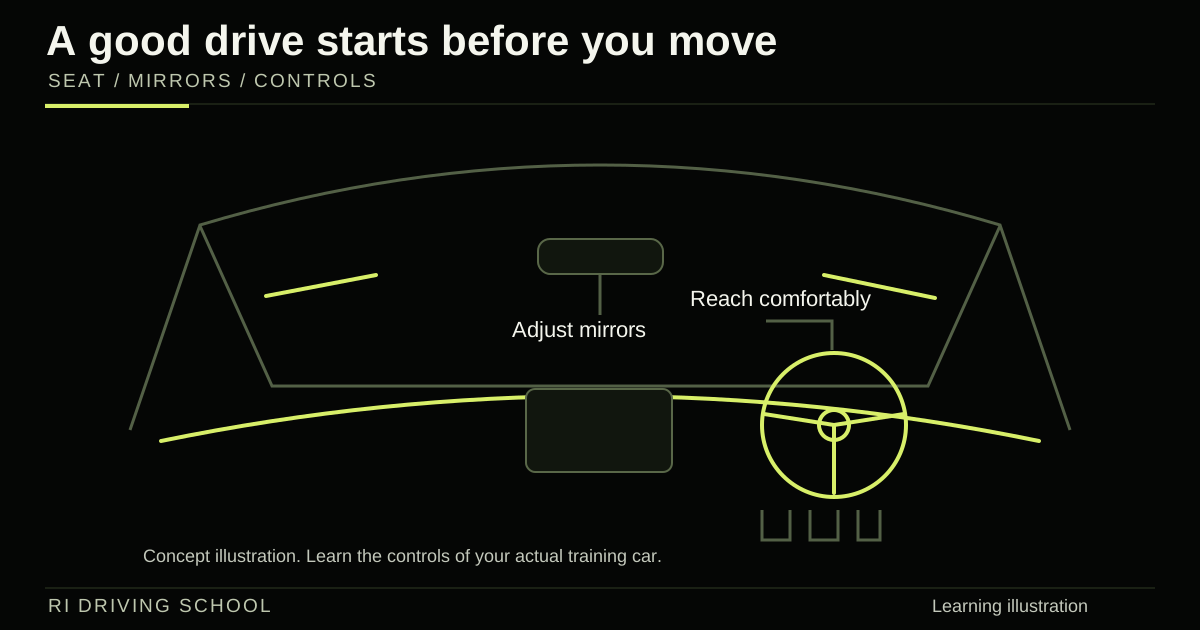
Spend time with the vehicle while safely parked. A different transmission, parking brake, selector or assistance system can change familiar actions. Set the seat, mirrors and head restraint, fasten the seat belt, and identify lights, wipers and demisting controls. Use the owner's manual for the exact model and ask the instructor to explain unfamiliar features.
Describe the situations that matter to you
Replace “I have forgotten everything” with a short list of situations. Examples include moving away smoothly, keeping a suitable road position, judging a junction, reversing into a space or joining a busier road. Explain how long you have been away from driving and what you hope to do independently.
It is useful to separate a control difficulty from a decision difficulty. A late gear change is not the same problem as noticing a junction too late. The first may need coordination practice; the second may need earlier scanning and planning. Identifying the difference makes the lesson goal more precise.
Agree a manageable first review
Discuss an appropriate setting with the instructor and begin within lawful, suitable conditions. A review should make it possible to observe ordinary actions without forcing difficult traffic too early. The aim is to establish a starting point, including when prompts or interventions are necessary.
Ask for feedback in plain language. “Check earlier before changing position” gives you something to practise. “Be more confident” does not explain the required action. Agree what a successful repetition would look like before moving on to a more demanding situation.
Build a focused practice plan
- Choose one or two skills for the next session.
- Include observation and decision-making, not just operation of controls.
- Repeat the skill under suitable conditions before increasing complexity.
- Review what you managed independently and what still needed help.
- Plan the next step around demonstrated progress rather than a fixed completion date.
If your main goal is a regular journey, discuss the types of junction, parking and traffic decisions it involves. Do not assume the school operates along that route or provides collection from your area. Confirm the serving centre, meeting point, vehicle, session length and available schedule before arranging lessons.
Measure progress without rushing
Keep a short record after each session. Note one reliable improvement and one task needing further work. Readiness for independent driving should reflect consistent observation, control and judgement, not simply having completed a purchased number of lessons.
Conditions also matter. A skill practised in daylight on a dry, quiet road does not automatically demonstrate the same ability at night or in heavy rain. Discuss those differences before extending your driving. If concentration deteriorates or a task becomes overwhelming, stop safely and reconsider the plan.
See the Driver Refresher Training Course information and availability page or send a general refresher enquiry. Continue with a practical observation and decision routine.
References: consult the relevant provisions of the Motor Vehicles Act for licence entitlement and restrictions, and your manufacturer's manual for vehicle-specific operation. The linked licence-return guide provides the reviewed amendment and authority sources for suspension-related enquiries.
Choose your Guwahati area when making an enquiry. The office will confirm the actual serving centre and availability; the directory does not imply a branch in each locality.
References and review date
Reviewed 12 November 2026. Check the official source for current requirements.