Driver Refresher Training Course
A Refresher Routine for Observation, Distance and Safer Decisions
Turn vague advice to drive more carefully into a practical routine for noticing, deciding, acting and reviewing during suitable lessons.
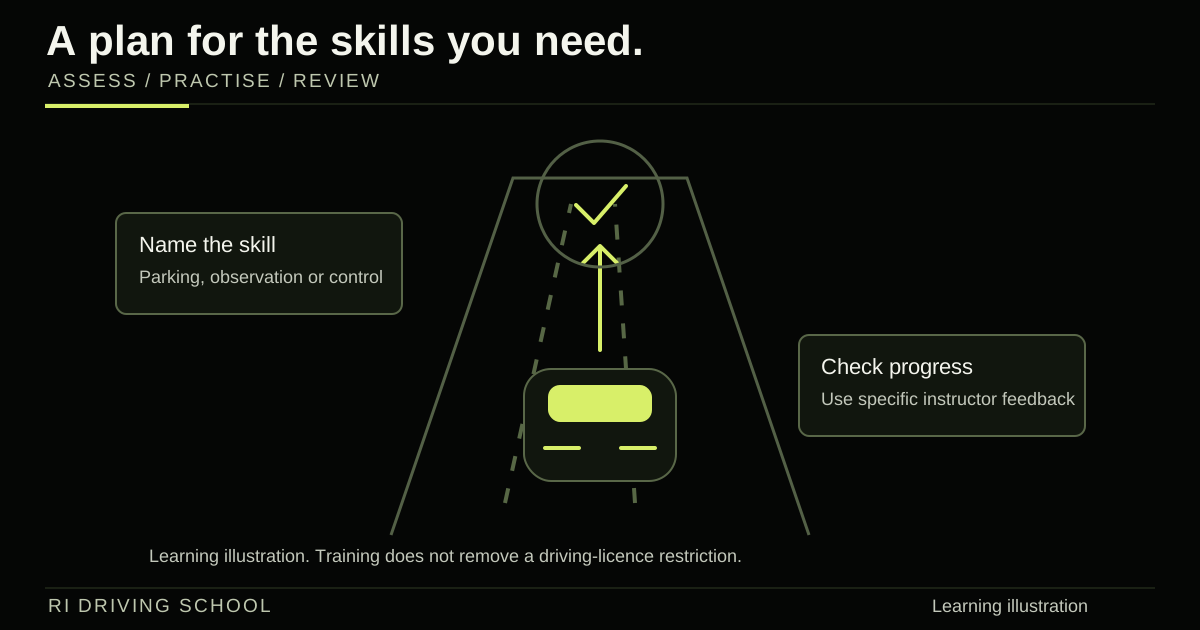
“Be more careful” is difficult advice to practise because it does not identify an action. A useful refresher lesson makes the task specific: notice a hazard earlier, leave more room, choose a suitable speed, or make a decision before pressure builds. This guide offers a routine to discuss with an instructor when you are legally entitled to undertake the planned driving.
Notice what could change
Look beyond the vehicle immediately ahead. A bus approaching a stop, a parked car with someone inside, a pedestrian near a crossing or a vehicle waiting in a side road may change the situation. You do not need to predict exactly what each person will do. You need to recognise where uncertainty deserves more space and attention.
During a lesson, an instructor may ask you to describe one developing situation. Keep the description short enough that it does not distract from driving. For example, “The bus hides the crossing; I need a better view and more time.” The purpose is to connect observation to a sensible response, not to narrate every object.
Plan space and speed together
A following gap should give you room to respond to the actual conditions. Speed, visibility, weather, road surface and the vehicle's condition all matter. Do not treat a familiar gap or a remembered rule of thumb as a guarantee when the conditions change. The national driving regulations require a speed suited to maintaining control and the circumstances.
Look for a plan that reduces urgency. Early, progressive slowing is different from arriving quickly and making a sharp correction. Check the traffic behind before a meaningful change and make your actions understandable. If someone follows too closely, avoid retaliation or sudden braking intended to teach them a lesson.
Choose a response before committing
Before changing lanes, turning or passing an obstruction, ask whether the observation is adequate and whether you can complete the movement safely. An indicator expresses intent; it does not create priority. If the situation is not clear, waiting or choosing a lawful alternative may be the appropriate response.
Missed turns are useful practice examples. The safe response is normally to continue in a lawful manner and find another route, not to make a sudden manoeuvre. Agree with your instructor how to handle uncertainty so you can focus on the road rather than feeling that you must rescue every navigation instruction.
Remove avoidable demands
Set navigation and organise loose items before departure. If a message, call or adjustment requires attention, deal with it while safely and lawfully parked. Ask passengers for a quieter moment when you need to concentrate on a difficult situation.
Do not drive after drinking alcohol, while impaired by drugs or when fatigue makes safe driving doubtful. Arrange another means of travel. If a medicine may affect alertness or vehicle control, seek advice from a qualified health professional and follow the relevant warnings. A refresher lesson cannot make impairment safe.
Review the decision rather than the result alone
A manoeuvre that ended without a collision may still have left too little space or relied on someone else braking. Conversely, waiting can be a good decision even when another driver becomes impatient. Discuss what information was available and why you acted when you did.
- What first suggested that the situation could change?
- Did you notice it early enough to respond smoothly?
- What could you not see?
- Did the chosen speed and space leave a useful margin?
- Which one action should you practise next time?
Keep the record factual. “I moved before checking the side area” suggests a learning task. Calling yourself a bad driver gives no practical direction. Use the instructor's feedback to choose a manageable next exercise and repeat it under appropriate conditions.
Keep general refresher training separate from legal compliance
This routine is educational guidance for safer habits. It is not a statutory attendance record, a competence-test result or evidence that a suspended licence can be returned. Where an authority has imposed a restriction or training condition, follow the written order and verify the accepted provider and evidence.
Read the authority-directed refresher and licence-return guide for that separate purpose. For ordinary skills practice, see Driver Refresher Training Course information, ask about confirmed availability, and use the return-to-driving assessment guide to identify your starting goals.
Reference: the Motor Vehicles (Driving) Regulations, 2017 provides the national framework for observation, safe positioning, speed and responsible road use. The linked legal guide explains the limits of school-issued evidence.
Choose your Guwahati area when making an enquiry. The office will confirm the actual serving centre and availability; the directory does not imply a branch in each locality.
References and review date
Reviewed 12 November 2026. Check the official source for current requirements.