Road Safety
Night driving, fog and reduced visibility
Adjust your speed and lighting when you can see less of the road.
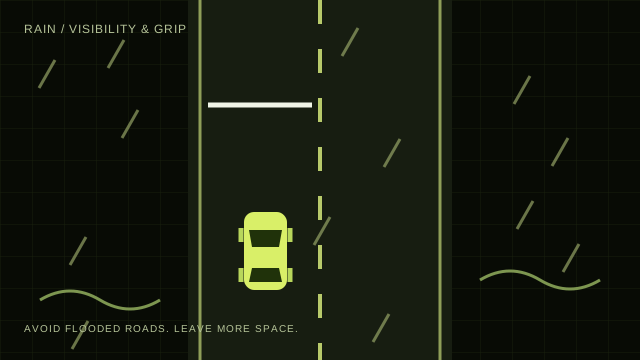
Darkness and fog reduce the information available to a driver. Objects may appear later, distances can be harder to judge and bright lights can make it difficult to see. Build these skills gradually with an instructor after you are comfortable with daytime control and observation.
Prepare the car and route
Clean the windscreen, mirrors and lamps. Check that lights and wipers work and that you know the demister controls. Dirty glass can scatter glare and make a clear road seem blurred. Plan a manageable route with safe stopping places. Avoid beginning a demanding journey when tired or when weather warnings suggest it can wait.
Use lighting thoughtfully
Use the appropriate headlights for conditions and dip them when necessary to avoid dazzling other road users. High beams can reflect back from fog and make visibility worse. Fog lights, where fitted, are for the conditions specified in the vehicle handbook and applicable rules; switch them off when they are no longer needed so they do not dazzle others.
Do not depend only on automatic-light settings. Some systems may not select suitable lights in daylight fog or heavy rain, and daytime running lights may not illuminate the rear. Check the actual vehicle's operation before relying on it. Set dashboard brightness so instruments remain readable without distracting glare.
Choose speed from what you can see
Travel slowly enough to stop within the clear distance ahead. Increase the following gap and avoid using another vehicle's tail lamps as your only guide. That driver may make an error or travel faster than conditions allow. Watch for unlit bicycles, pedestrians, animals and vehicles stopped near the edge.
If an approaching vehicle dazzles you, avoid staring into its lights and reduce speed as necessary while maintaining a safe path. Do not retaliate with your own high beams. Keep scanning and be prepared to stop safely if visibility becomes inadequate.
Know when to pause
If conditions become too difficult, leave the carriageway only where there is a safe, lawful place to stop. Do not stop in a live lane simply because you feel uncertain. If an unavoidable emergency leaves the car on the road, follow the vehicle warning procedure and seek assistance. Discuss the experience afterwards: the learning goal is a sensible decision about visibility and risk, not proving that you can continue through every condition.