Driving Lessons
Observation, blind spots and safer lane changes
Learn to check, decide and move without surprising other road users.
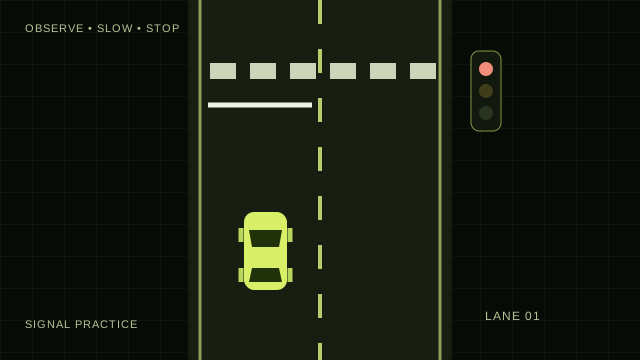
Changing lanes combines several tasks: deciding whether the change is necessary, checking the space, communicating and steering smoothly. A signal tells others what you intend; it does not create a gap or give you priority. Practise the process with an instructor on suitable roads before using it in demanding traffic.
Keep an updated picture
Use mirrors regularly so traffic behind is not a surprise when you need to change speed or position. Check again before acting, because a motorcycle or faster vehicle can enter the space quickly. Do not stare into one mirror for so long that you stop watching ahead. Mirror checks should support continuous awareness.
A blind spot is an area a mirror does not show adequately. Learn the appropriate direct check for the car and manoeuvre. Keep it brief and maintain steering control. Cameras, blind-spot warnings and parking sensors can help, but they may miss objects or fail in poor conditions. They support observation rather than replace it.
Plan the change
Ask whether a lane change is needed now. If your exit is approaching, plan early instead of crossing several lanes at the last moment. Check signs and lane markings first. Look for a gap that allows the manoeuvre without causing another person to brake or swerve. Consider the speed difference, not just the apparent distance.
Signal in good time when it will inform others. Recheck the intended space, including the relevant blind spot. Move gradually when safe and cancel the signal afterwards. If the gap closes, stay in your lane and try again when there is a safe opportunity. Missing a turn is preferable to making an unsafe movement.
Common beginner mistakes
Looking over a shoulder can unintentionally pull the steering wheel. Practise holding a steady course with your instructor. Another mistake is accelerating sharply while still uncertain about the gap. Keep the decision clear: observe first, then act only when the conditions support it. Never treat another driver's flashing lights as a complete safety guarantee.
Review the decision, not only the manoeuvre
After practising, discuss what you saw and why you chose that gap. Could you identify a vehicle approaching from behind? Did a cyclist remain beside you? Good feedback explains the observations behind the movement. Over time, a deliberate routine becomes smoother without becoming careless or automatic.