
Transport and licence guidance
Transport Driving: A Thoughtful Pre-Journey Safety Routine
Build a practical preparation routine around the actual vehicle, intended work, passengers or goods, and the concerns that need resolving before departure.
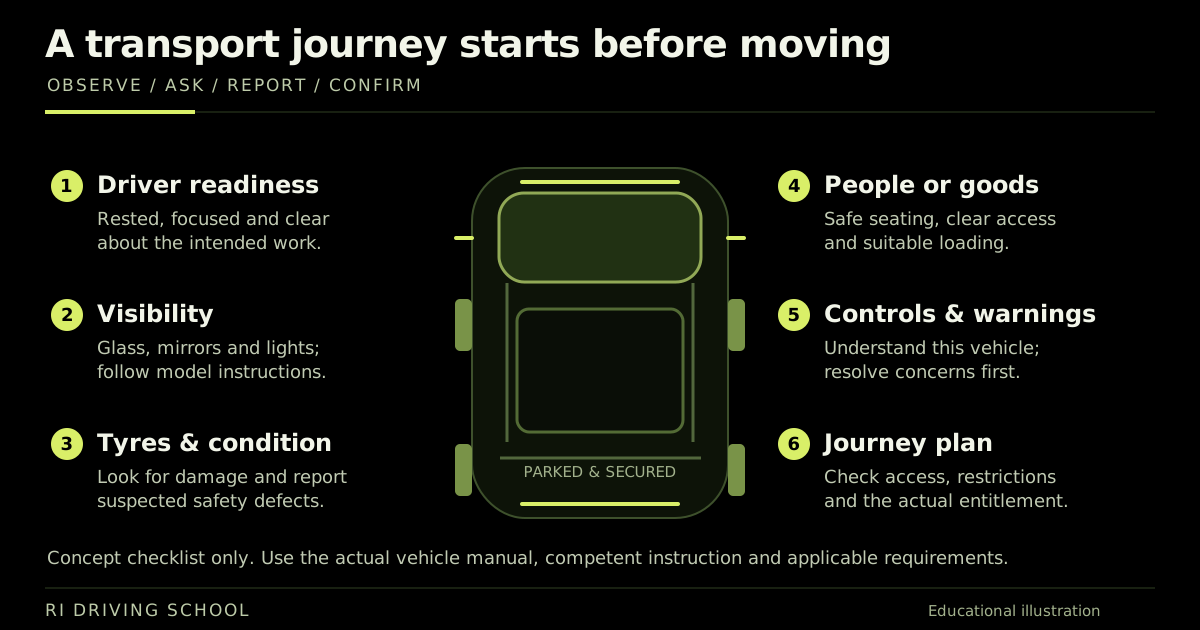
A transport journey begins before the vehicle moves. The driver needs to understand the vehicle, the intended work, the people or goods involved and the conditions ahead. A familiar route does not remove these responsibilities. A deliberate preparation routine helps you identify questions early, when a defect, unsuitable load or unclear instruction can still be addressed without pressure from moving traffic.
Match the task to the vehicle and your entitlement
Discuss the intended vehicle and work with the school or operator. A private car, a passenger-carrying vehicle and a goods vehicle can involve different arrangements even when their controls look familiar. Confirm the actual vehicle class, registration particulars, permitted use and your applicable driving entitlement. Do not infer these from the course name alone.
LMV transport eligibility has important legal distinctions, including the vehicle’s weight and use. Avoid relying on a generic age or experience checklist copied from a different category. Use the current licence guidance and confirm the applicable requirements through the relevant licensing authority. Training admission does not itself authorise commercial driving.
Prepare yourself as well as the vehicle
Leave enough time to inspect the vehicle and ask questions. Arrive rested and ready to concentrate. If fatigue, illness, medication effects or another difficulty could affect safe control, raise the issue before taking charge. A schedule should be discussed rather than treated as a reason to overlook a safety concern.
Put navigation instructions and essential contact information in order before moving. Keep loose objects away from the controls and arrange necessary items so that they do not distract you. During a journey, stop in a suitable lawful place before dealing with a problem that requires your attention away from driving.
Make the parked walkaround purposeful
Use a checklist suited to the actual vehicle and its manufacturer’s instructions. From a safe position, look for visible tyre damage, unusual leaks, damaged lights, loose external parts and anything obstructing the intended path. Check that windows, mirrors, lamps and registration markings are clear enough for their purpose. Do not crawl underneath an unsupported vehicle or dismantle parts as part of a beginner’s check.
Inside, confirm a usable driving position, clear visibility, secure doors, accessible controls and the operation of the relevant warning displays. Learn what each warning means in that model. These are observations to discuss with an instructor or responsible operator, not a declaration that you have mechanically certified the vehicle.
Follow the manual when a check is vehicle-specific
Tyre pressure, fluid-checking methods, load limits and warning responses vary. Ask where the correct information is recorded and how to find the relevant section of the owner’s manual. A pressure remembered from another car or a video about a different engine is not a safe substitute.
Report an unfamiliar warning, damaged tyre, braking concern or other suspected safety defect before departure. State what you observed, when it occurred and which vehicle is involved. Let the competent person responsible assess the issue. Do not erase a warning or assume that an earlier driver’s reassurance resolves it.
Check people, luggage and goods arrangements
For passenger work, discuss safe boarding and alighting, suitable stopping places, seating and the use of the applicable restraints. Keep access and visibility clear. Explain any necessary instruction calmly before the journey, especially where someone needs assistance. Do not start moving while a boarding or door-security concern remains unresolved.
For goods, obtain proper instructions about permitted weight, distribution and secure loading. A delivery deadline does not justify an unsuitable or unsecured load. Ask the responsible person to resolve uncertain loading arrangements; do not improvise specialist securing methods from a short online guide. Hazardous goods require separate requirements and competent instruction.
Plan the journey before the difficult decision
Consider the destination, suitable access, likely stopping places, road restrictions and the weather information available. Ask about any vehicle height, width or weight limit relevant to the route. A navigation app’s suggestion is not confirmation that the vehicle may legally or safely use a road.
For a Guwahati journey, discuss how changing traffic or monsoon conditions might affect the agreed plan. Do not invent an alternative through an unfamiliar narrow lane simply to keep to a promised arrival time. If access becomes uncertain, find a safe place to stop, reassess and contact the appropriate person.
Record concerns and make a clear handover
A useful handover explains outstanding defects, relevant journey changes and anything the next driver needs to know. Distinguish what you checked from what someone else reported. Written notes reduce the chance that a concern disappears between shifts or is mistaken for a completed repair. Follow the operator’s reporting process and keep personal passenger information private.
During training, ask your instructor to review your routine. Which observations were useful? What did you miss? Which checks need practical demonstration on that vehicle? A short, accurate checklist that you understand is more valuable than a long list copied without knowing what each item means.
Keep building a reliable routine
Use these learning topics to review the vehicle, journey and responsibilities involved. This article is educational guidance; LMV Transport is no longer an available RI course choice.
Read the licence guidance and current course list. Ask the office which available course fits your learning needs. The applicable licence, vehicle and operational requirements remain separate.
Sources and review date
Reviewed 12 November 2026. The sources below inform the educational principles in this guide. Manufacturer references describe their own equipment; they do not establish which vehicles or systems RI uses. Overseas technical guidance does not determine Indian licensing requirements.
- Driver and Vehicle Standards Agency: walkaround check topics (UK technical reference)
- Maruti Suzuki: vehicle-specific owner’s manuals
- India Code: Motor Vehicles Act, 1988
- Supreme Court: Sunita v United India Insurance, applying the LMV transport distinction (2025)
References and review date
Reviewed 12 November 2026. Procedures depend on the actual vehicle and applicable legal requirements.